
The Kia EV6 is an all-electric crossover built on an 800-volt architecture, which lets it add a large amount of range in a short stop at a compatible fast charger. That capability, more than its range figure, is what makes it practical for driving beyond the Space Coast. You can see which EV6 models are on the lot right now, or start with our EV research pages if this is your first electric vehicle.
Range gets all the attention in EV shopping. Charging speed matters more, and the EV6 is one of the vehicles that demonstrates why.
Why 800 volts matters
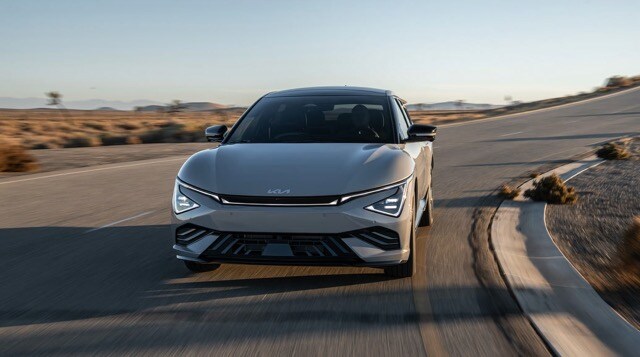
Most electric vehicles use a 400-volt system. The EV6 uses an 800-volt architecture.
Higher voltage means the same amount of power can move with less current, which produces less heat, which allows faster charging without cooking the battery. On a compatible high-power DC fast charger, that translates into adding a large share of your battery in the time it takes to use the restroom and get a coffee.
The practical version: a drive from Cocoa up to Jacksonville or over toward Tampa stops being something you plan around charging and becomes a normal drive with one short stop.
Range still matters, of course. But a vehicle that charges quickly is more usable than a vehicle with more range that charges slowly.
The connector question, answered
This is the part that confuses shoppers most, and it is worth being precise about. The current EV6 comes with a native North American Charging System port — the Tesla-style connector — and Tesla Supercharger compatibility, with the charge port on the driver's side rear rather than the nose. Older EV6 model years used the CCS connector instead, which is why a used EV6 and a new one on the same lot can differ.
What that means in practice: Supercharger stops are straightforward, and an adapter is what you need for the CCS networks, sold separately. Ask us to confirm the connector and what comes with the specific vehicle before you buy — it is a two-minute conversation that prevents a frustrating first road trip.
What it is like day to day
The EV6 is a crossover with a low, wide stance and a sloping roofline — closer to a tall hatchback than a conventional SUV in feel. It drives noticeably lower and flatter than most crossovers, which many people prefer once they try it.
Instant torque makes it quick from a stop, which is genuinely useful pulling onto US-1 or merging onto 528. The dual-motor all-wheel-drive versions are quick by any standard, not just by EV standards.
Interior space is good, with a flat floor from having no transmission tunnel. Cargo room is respectable, though the sloping rear glass costs some vertical space compared to a boxier vehicle. If you need a third row, the larger EV9 is the one to look at instead.
Which version fits
The lineup runs from the entry trim through the longer-range versions to the GT-Line, and most trims can be had with rear-wheel drive or with dual-motor all-wheel drive. One point worth clearing up: GT-Line is an appearance and equipment package rather than a separate performance car, so choose it for how it looks and what it includes, not for a power figure.
The more useful decision is drive configuration. Rear-wheel drive delivers the longest range on a given battery; all-wheel drive trades some of that for a second motor and noticeably stronger acceleration. Come drive both — the difference is obvious in about a mile. Current new vehicle specials and Kia offers and incentives are worth checking before you settle on a trim.
The EV6 is assembled in West Point, Georgia.
The question to answer first
Can you charge where you park overnight?
For most Brevard County households with a garage or driveway, the answer is yes, and a Level 2 circuit makes charging invisible — you leave every morning full. That is the single biggest factor in whether someone is happy owning an EV.
If you park on the street or in a lot without charging, the EV6's fast-charging capability helps a great deal, but you are still managing your charging rather than forgetting about it.
Florida heat is also worth mentioning honestly. Sustained heat is the bigger driver of long-term capacity loss, while cold mostly causes temporary range loss that comes back when it warms up. The EV6 manages battery temperature actively, and habits help — avoid routinely charging to 100 percent unless you need the range, and use DC fast charging for trips rather than as your daily method.
If the answer to the overnight-charging question is no, that is worth knowing before you buy rather than after. A Sportage Hybrid, a Sorento Plug-In Hybrid or a Niro may fit your parking situation better while still cutting your fuel bill.
Ownership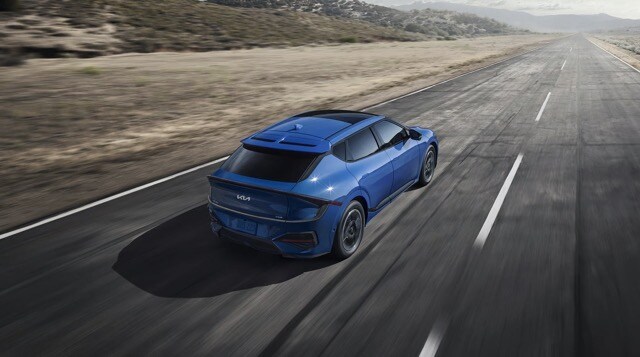
Kia's EV battery and EV system warranty runs separately from the basic vehicle warranty and is among the longer programs available, covering the high-voltage battery along with the electric motor, power control unit and onboard charger. Our Kia warranty page lays out the programs, and we will show you the exact terms that apply to the vehicle you are considering rather than the lineup in general — coverage details differ between original and subsequent owners.
Maintenance is simpler than a gas vehicle: no oil, no plugs, no exhaust. It is not no maintenance, though. Tires wear faster on the heavier vehicle, and cabin filters, brake fluid, coolant, the 12-volt battery and battery cooling service all remain on the schedule. Our service department handles EV service, and you can check service and parts specials, tire specials, or look up open recalls on your VIN. Here is why our customers service with us.
When you are ready, value your trade, get prequalified or start a finance application through our finance center. You can also browse our full new inventory, our Kia Certified Pre-Owned vehicles, or read more on our blog.
Frequently asked questions
How fast does the EV6 charge?
On a compatible high-power DC fast charger, it adds a large share of its battery in roughly the length of a coffee stop. Charging deliberately slows past about 80 percent to protect the battery, so the last stretch always takes longer than the first.
Which charging connector does it use?
The current EV6 has a native North American Charging System port and Tesla Supercharger compatibility. Earlier model years used CCS, and an adapter for the CCS networks is sold separately, so confirm the connector and the accessories on the specific vehicle you are considering.
Does Florida heat hurt the battery?
Sustained high temperatures are the bigger factor in long-term capacity loss, while cold mostly causes temporary range loss. Active thermal management and sensible charging habits both help.
How much range do I really get?
Real-world range varies with speed, air conditioning use and driving style, and it differs between the rear-wheel-drive and all-wheel-drive versions. Highway driving at speed uses more energy than city driving. Check the rating on the specific EV6 you are considering.
Can you service EVs at the dealership?
Yes. Contact our service department with any EV6 question.
Come drive one at Jenkins Kia of Cocoa on West King Street — here are directions, and here is more about our store.